

Skyhigh India is a foreign affiliate of the United States Parachute Association (USPA).
We are commercial skydiving drop zone located two hours away from Delhi
We are a premier dropzone for skydiving in India and provide an experience of a lifetime.
Skydiving in India – Skyhigh India | India’s Only International Dropzone
Skyhigh India is a foreign affiliate of the United States Parachute Association (USPA).
We are commercial skydiving drop zone located two hours away from Delhi
We are a premier dropzone for skydiving in India and provide an experience of a lifetime.
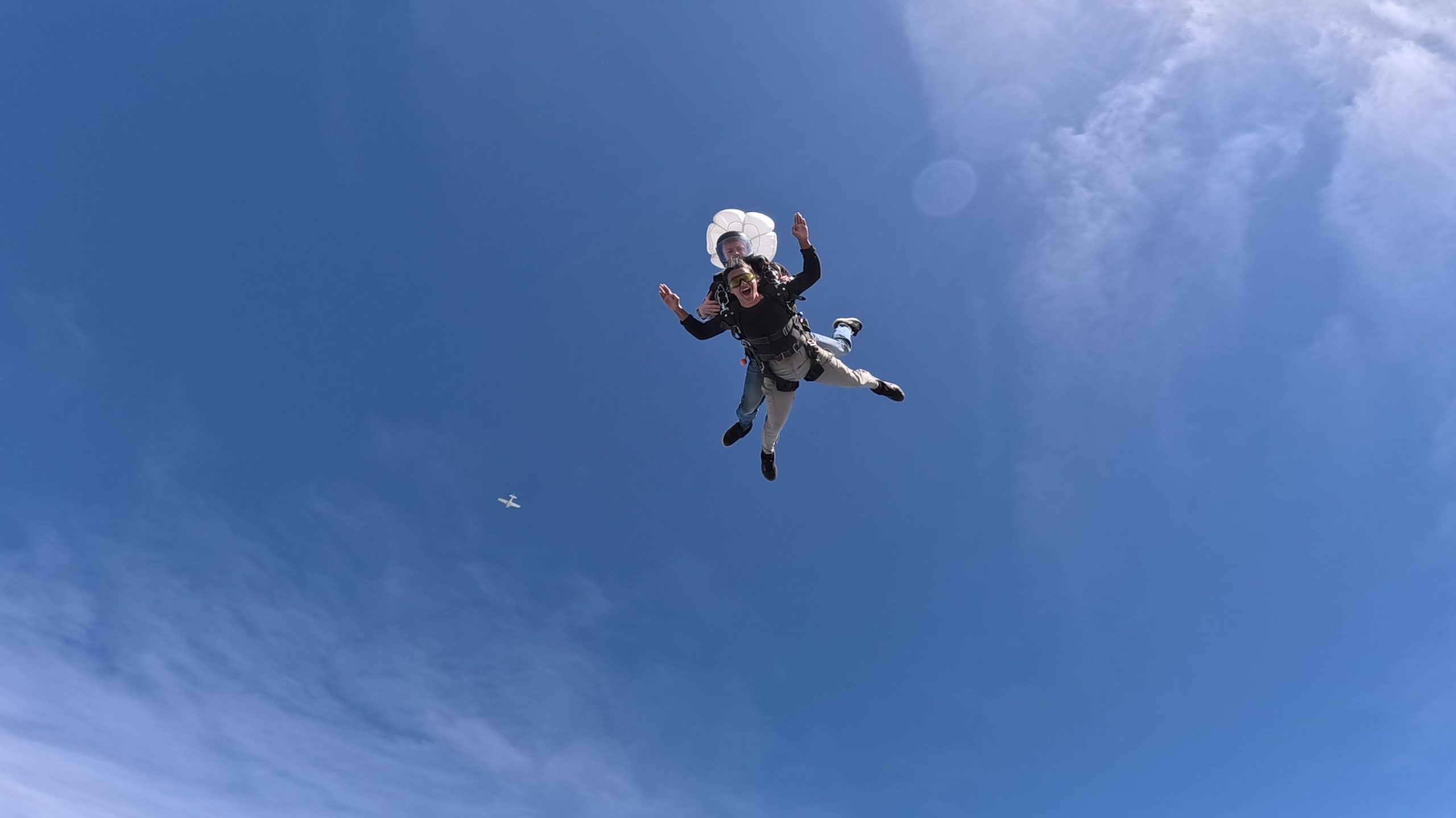
Skydiving Pattaya has a genuine appeal for Indian travellers. Thailand is one of the most visited international destinations for Indian tourists, familiar, accessible, and sufficiently exotic to feel like a genuine adventure. Adding a tandem jump to a Pattaya holiday seems, on the surface, like an obvious and exciting addition to the itinerary.
But for Indian first-timers who are making the trip specifically to skydive and those who are planning their adventure around a single extraordinary experience, the reality of skydiving Pattaya compared to what Skyhigh India offers is significantly more complicated than the brochure suggests.
At Skyhigh, we respect skydiving Pattaya for what it is. What we are not willing to do is stay silent while Indian first-timers spend three to five times the necessary money, travel thousands of kilometres, navigate foreign logistics in an unfamiliar language, and arrive at an aircraft door in a depleted state when an equal or superior first jump experience is available in their own extraordinary country.
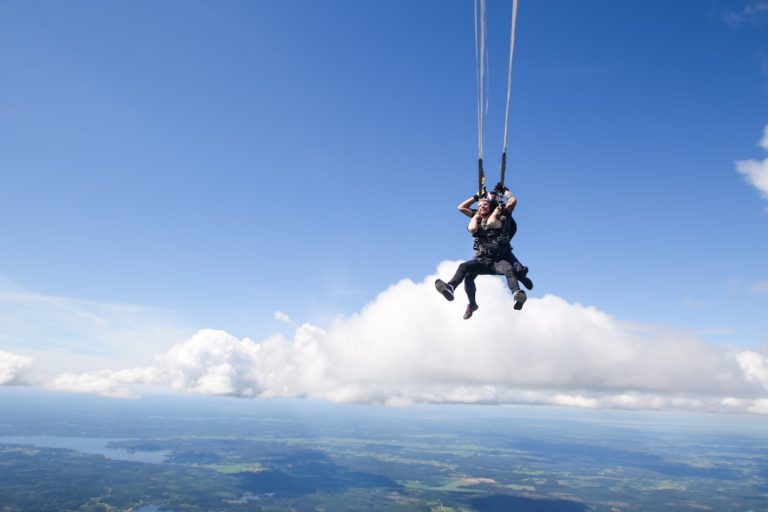
The alarm: Skydiving Pattaya’s base jump price looks competitive but the total cost for Indian travellers is three to five times the equivalent Skyhigh India experience when all travel expenses are honestly accounted for.
Pattaya reality: A return flight from a major Indian city to Bangkok or Pattaya typically costs between ₹15,000 and ₹40,000 depending on origin, lead time, and season. A Thai tourist visa carries its own cost and processing requirements. Accommodation in Pattaya, where mid-range hotels rarely fall below ₹5,000 per night, adds meaningfully to the total for a minimum two- to three-night stay.
Skyhigh advantage: A complete, world-class tandem skydiving experience with Skyhigh India is priced between ₹30,000 and ₹40,000 all-inclusive, with no visa, no international flight, no foreign accommodation, and no logistics costs of any kind. What you see is what you pay. You can even book your slot with a minimum booking amount of just ₹5000.
Verdict: When the total cost is calculated honestly and completely, skydiving Pattaya costs Indian first-timers between ₹70,000 and ₹2,00,000 for the same sixty seconds of freefall that Skyhigh India delivers for ₹25,000 to ₹40,000.
At Skyhigh, our pricing is transparent, all-inclusive, and a direct reflection of the world-class experience we deliver. No hidden additions. No surprises on the day. And no need for a passport.
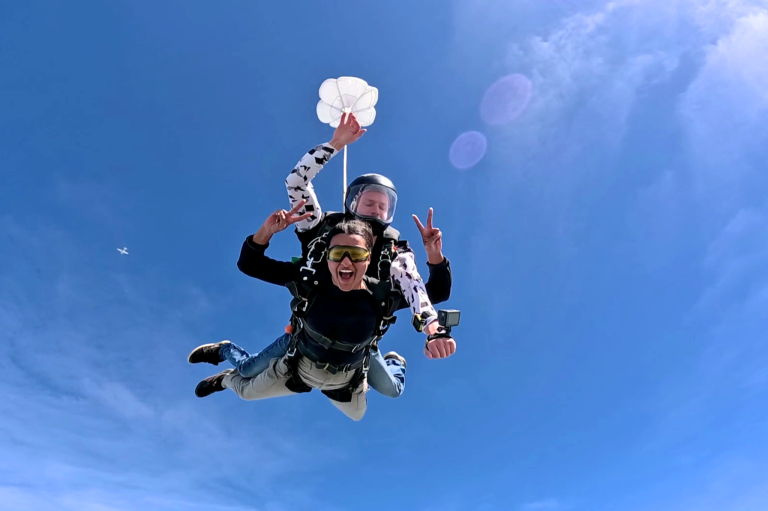
The alarm: Thailand’s skydiving certification framework while credible is significantly less independently verifiable for Indian first-timers than India’s DGCA dual-certification system, creating a safety transparency gap that first-time jumpers should not have to navigate in a foreign language.
Pattaya reality: Skydiving Pattaya operations fall under the oversight of the Thai Civil Aviation Authority a legitimate regulatory body that sets operational standards for aviation activities within Thailand. It is a straightforward observation that for an Indian first-timer, verifying the certification status of a skydiving Pattaya operator in a foreign regulatory framework, in a foreign language, with no ability to physically inspect the facility before booking is meaningfully more difficult than verifying the certification of a Skyhigh India operation.
Skyhigh advantage: Every Skyhigh India operation is fully affiliated with the United States Parachute Association and fully compliant with the Directorate General of Civil Aviation of India. Our DGCA compliance status is publicly confirmable in English and Hindi, by any Indian customer who asks, through bodies whose regulatory framework is accessible and understandable to the Indian market.
Verdict: Skyhigh India delivers equal or superior safety standards with significantly greater transparency and customer verifiability than skydiving Pattaya in the customer’s own language, under a regulatory framework they can independently research and understand.
The alarm: International travel logistics, visa applications, long-haul flights, unfamiliar transfers, foreign currency management, and language barriers at the drop zone add significant layers of stress to a first jump experience that should be characterised entirely by preparation and excitement.
Pattaya reality: An Indian traveller planning skydiving Pattaya must first apply for and obtain a Thai tourist visa. Then book a return international flight, typically four to five hours each way. Then navigate Bangkok’s Suvarnabhumi Airport and arrange the two-hour-plus transfer to Pattaya by bus, taxi, or private transfer. Then check into accommodation, manage foreign currency, and find the drop zone, which is located outside central Pattaya and requires an additional transfer on the day of the jump. In addition to that, you’ll need insurance to cover the adventure sports.
Skyhigh advantage: Skyhigh India requires nothing of you beyond a booking confirmation and a drive to the drop zone. No visa. No passport. No international flight. No foreign currency. No transfers in an unfamiliar city. And no language barrier; our ground training sessions are conducted by instructors who understand the specific anxieties, questions, and cultural context of Indian first-time jumpers, in the languages that serve them best.
Verdict: Skydiving Pattaya adds three to five days of international logistics to a thirty-second freefall. Skyhigh India delivers the same experience as a single, relaxed day trip, with the result that you arrive at the aircraft door energised and prepared rather than travel-fatigued and logistically stressed.
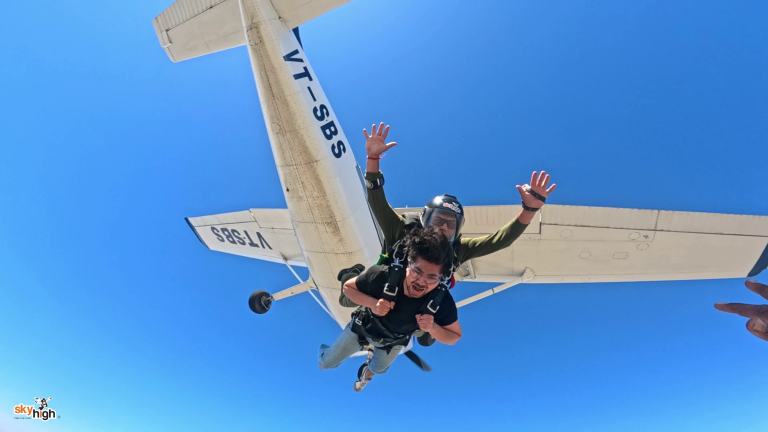
The alarm: Thailand’s monsoon season significantly restricts when Indian first-timers can experience skydiving in Pattaya, creating a seasonal constraint that compounds every other logistical challenge of an international skydiving trip.
Pattaya reality: Thailand’s monsoon season runs from approximately May through October, a six-month period during which heavy rainfall, strong winds, and poor visibility make skydiving Pattaya operations either suspended or severely restricted. The effective operational window for skydiving Pattaya is therefore concentrated in the November through April dry season, approximately five to six months per year.
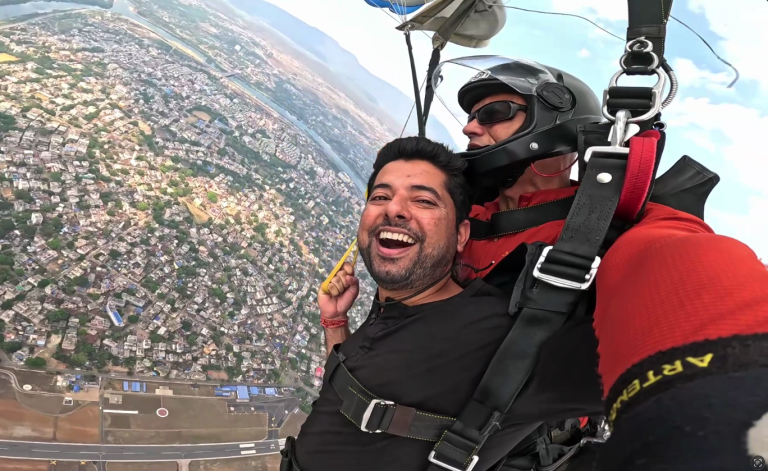
Skyhigh advantage: Skyhigh India’s network of certified drop zones across multiple states means that operational availability is distributed across different seasonal windows rather than concentrated in a single five-month period. October through February is the optimal season across most major Skyhigh locations but the combined availability across the network spans eight to ten months of the year, ensuring that a world-class first jump is accessible at some Skyhigh location in almost every month.
Verdict: Skydiving Pattaya offers a five to six month seasonal window that directly competes with India’s most expensive travel period. Skyhigh India offers eight to ten months of combined availability with the best conditions available precisely when Indian holiday travel is most natural and most affordable.
Skydiving Pattaya is a world-class experience in a world-class country. We say that without qualification. If you are travelling to Thailand for other purposes and the opportunity to jump presents itself within an existing itinerary, take it the Gulf of Thailand from 15,000 feet is genuinely extraordinary.
But for Indian first-timers making a dedicated trip with the specific purpose of experiencing their first skydive skydiving Pattaya is not the smarter choice. The total cost is three to five times higher. The safety transparency is lower. The logistics are significantly more complicated. The landscape is singular and personally disconnected. And the seasonal window is narrower, more expensive, and less flexible than what Skyhigh India delivers across its certified network of drop zones.
Skyhigh India offers everything that skydiving Pattaya offers the altitude, the freefall, the certified instructor, the parachute system, the certificate, and the extraordinary memory of a first leap at a fraction of the total cost, without a passport, in your own language, above your own extraordinary country.
Jumps typically take place from an altitude of around 10,000 feet. You will experience an adrenaline-pumping freefall lasting approximately 30 to 40 seconds at speeds of up to 220 km/h, followed by a serene 5 to 7-minute canopy glide once the parachute opens.
Wear comfortable, athletic clothing (like t-shirts, track pants, or leggings) and sturdy, lace-up running shoes or sneakers. Avoid loose jewelry, skirts, boots with heels, or shoes with open hooks.
Safety is the top priority at Narnaul. The dropzone utilizes state-of-the-art, USPA-approved equipment, including dual-parachute systems equipped with an Automatic Activation Device (AAD), which automatically deploys the reserve parachute in case of an emergency.
Age: The minimum age requirement is 18 years. (Minors aged 16–17 may be permitted with written parental/guardian consent with parents present there).
Weight: The standard maximum weight limit is usually 90–95 kg, depending on physical fitness and harness fit. Additional weight charges or restrictions may apply for individuals close to the limit to ensure a safe instructor-to-student ratio.
WhatsApp us

Skyhigh India is a foreign affiliate of the United States Parachute Association (USPA).
We are commercial skydiving drop zone located two hours away from Delhi
©2025 GOFORTH ADVENTURES PRIVATE LIMITED. All rights Reserved.